- Home
- Our story
Four generations of Brennans at one loom in Ross, since 1937
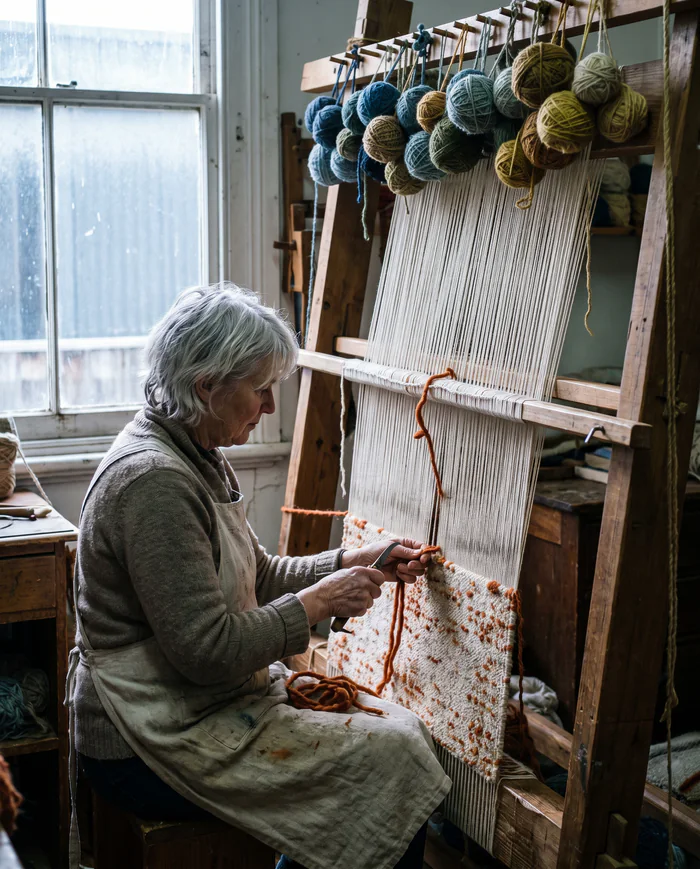
The same sandstone schoolhouse, the same window and, with two new beams, the same loom. Only the weaver has changed.


Why we still make about sixty rugs a year
My great-grandmother Agnes bought her loom at a clearing sale in 1937 for four pounds and set it up in the old schoolhouse on Church Street, which had stood empty since the new school opened. She had no plan to start a business. She wanted a rug for her own floor, and then the neighbours wanted one.
Eighty-nine years later we still work in that room. The loom has had new beams twice and the floorboards have been turned once, but the window is the same, and so is the way the rugs are made: Midlands merino, plant dyes, every knot tied by hand.
People ask why we do not make more. The honest answer is that the rugs would not be the same. A weaver can tie about four and a half thousand knots in a day and still tie every one of them well. We would rather keep you waiting a season than send you a rug we would not put our name to.
Every rug leaves with a card signed by the weavers who made it, and its number goes in the ledger Agnes started. If you ever want to know who made yours, look it up below.
Isla BrennanHead weaver, the fourth generation
Eighty-nine years in one schoolhouse
-
1937
The first loom
Agnes Brennan, a shearer's daughter from Campbell Town, sets up a timber frame loom in the empty Ross schoolhouse. Her first rug takes eighteen months, and it still lies on a homestead floor on the Macquarie River.
-
1950
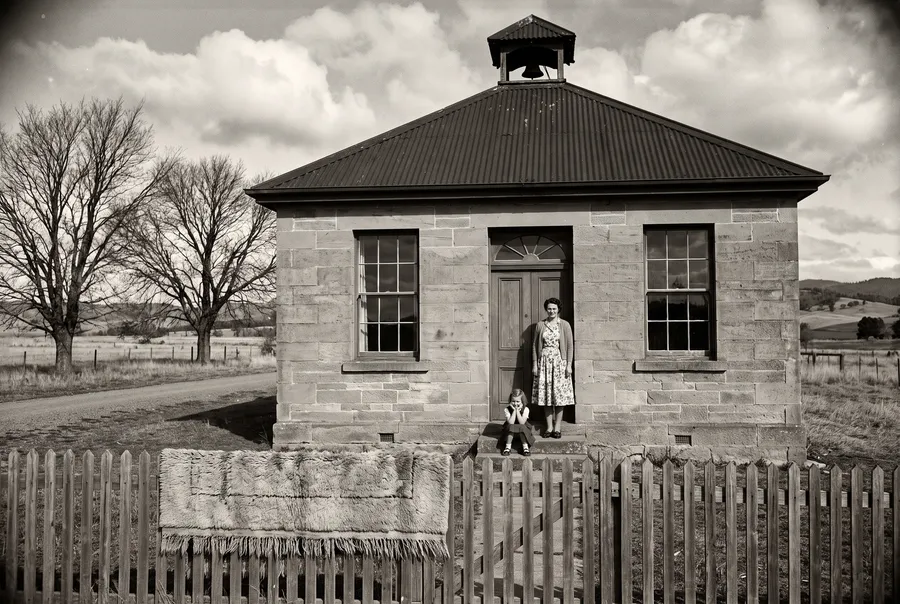
Rugs on the front fence
Washed rugs dry over the picket fence on Church Street. Agnes's daughter June, eight years old, learns to tie a knot on the front step after school.
-
1952
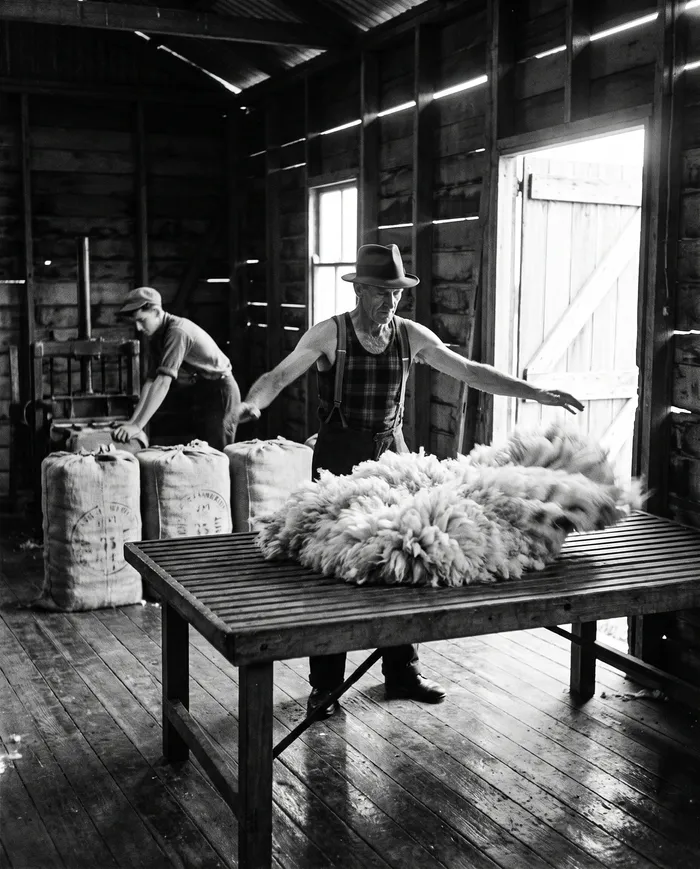
Three wool families
The Kerr, Pyke and Lennard families agree to sell their best fleece straight to the workshop. Their grandchildren still shear for us every spring, all within 30 km of Ross.
-
1962
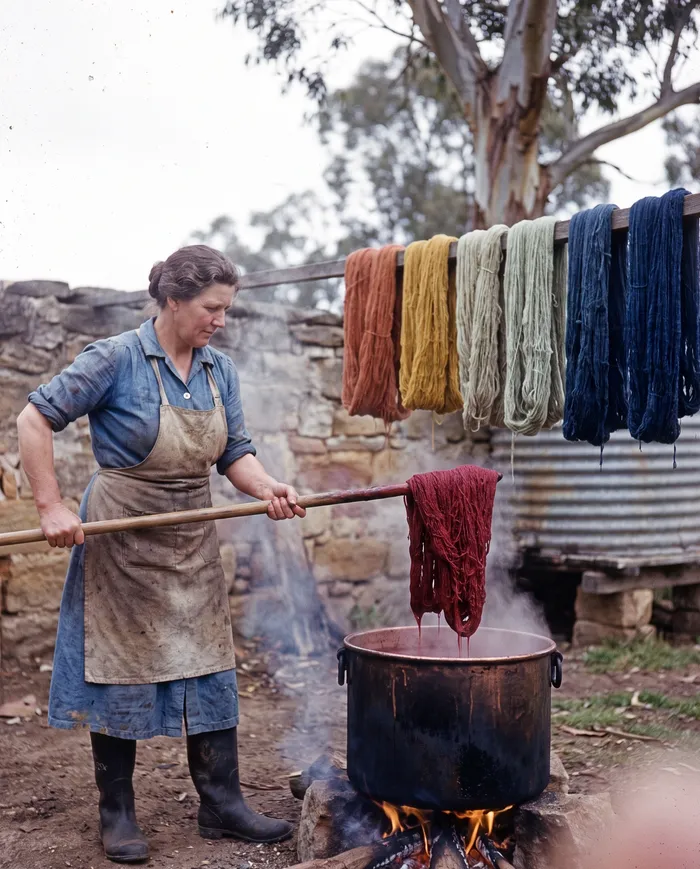
The dye garden
June plants madder, weld and woad behind the workshop and stops buying dyes altogether. Every colour since has come from a plant, a lichen or a bark.
-
1971
The second loom
A Ross joiner builds a second frame loom from Tasmanian oak, so two rugs can be on the go at once. There has never been a third.
-
1984
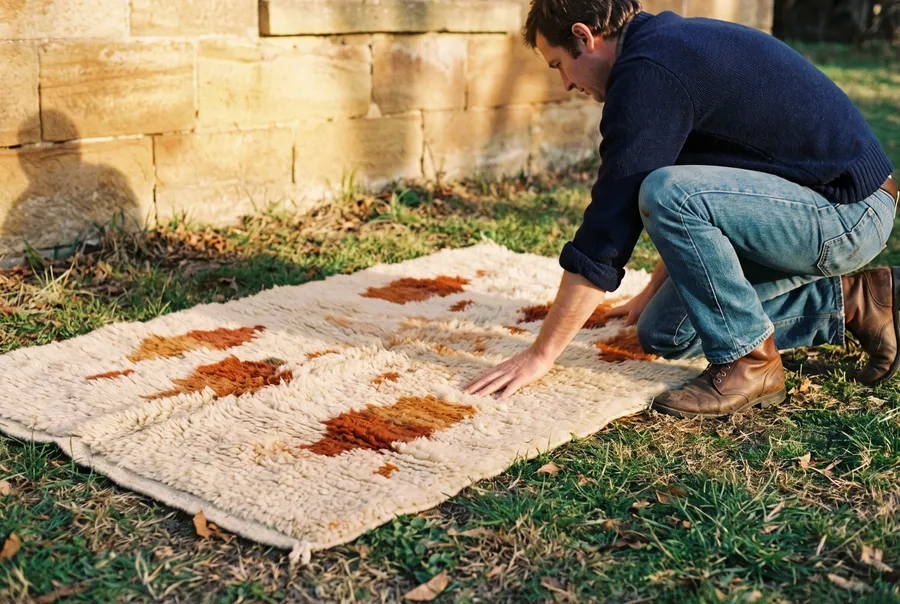
Bay of Fires
June's son Robert draws the Bay of Fires after a week on the east coast: orange lichen on pale granite. Forty-two years on, it is still the rug most people ask for.
-
2019
The fourth generation
Isla Brennan, Agnes's great-granddaughter, takes the head weaver's seat after eleven years at her father's side. Robert still dyes on Fridays.
-
2026
Today
Five people, two looms and a spinning wheel. About sixty rugs a year, each one written in the ledger Agnes started.


Every rug spends a week in the long room before it leaves
The front room runs the length of the schoolhouse. Each finished rug lies here for seven days and is walked on by everyone in the workshop, so the pile settles and any loose knot shows itself before the rug is numbered, signed and rolled. Lunch is at the same table, at one o'clock, as it was in Agnes's day.

Every rug we have made is in one ledger
Since 1937 each rug has been given a number, stitched on a cotton tape on its back, near the fringe. The ledger records who knotted it, whose wool it is and the dye pots it came from. Type a number to look one up.
An entry from the ledger will appear here.
Four things that have not changed since Agnes
About sixty rugs a year
Two looms, never a third. When the loom places for a season are full, the next rug waits for the one after.
Only plants in the dye pots
No synthetic dye has been through the workshop since 1962. Colours shift a little from pot to pot, and each pot is written down.
Wool from three families
Every fleece comes from the Kerr, Pyke and Lennard flocks, all within 30 km of Ross, shorn once a year in spring.
Home for repairs, for life
Any Ovis rug, of any age, can come back to Ross to be washed, re-fringed or re-bound.
The kind of rug you buy once, and leave to your grandchildren.
Southern HouseTasmania's quietest luxury: sixty rugs a year, and a waiting list for most of them.
The Island ReviewKnotted with the patience of another century.
Fibre and Form

The five people in the workshop
- Isla Brennan
- Head weaver. At the loom since 2008, the fourth generation of Brennans.
- Robert Brennan
- Isla's father and head weaver until 2019. Now in the dye garden on Fridays.
- Margaret Lowe
- Spinner and dyer since 1998. Every skein passes through her hands.
- Tom Ashby
- Finisher since 2011. Shears, carves and binds every rug.
- Ellie Pyke
- Apprentice weaver since 2024, and a granddaughter of one of the three wool families.
Visit the workshop in Ross
Come and see the looms, walk on the rugs in the front room and choose your wool by the fire. Ross is about an hour from Launceston and an hour and a quarter from Hobart, just off the Midland Highway.
- Open
- Thursday to Saturday, 10 am to 4 pm, by appointment
- Where
- The schoolhouse, Church Street, Ross, Tasmania
- Lunch
- At one o'clock, at the long table. Visitors are welcome to stay.
The history, people and press on this concept store are invented for the demonstration.

- Made to order
- Knotted or woven for you in 8 to 16 weeks, with one size of each rug kept ready to ship.
- Free delivery
- Rolled, wrapped and delivered free anywhere in Australia.
- Wool samples
- A 20 cm square of any rug for $15, taken off your rug.
- Repairs for life
- Send it home to Ross for re-binding, re-fringing or a clean.