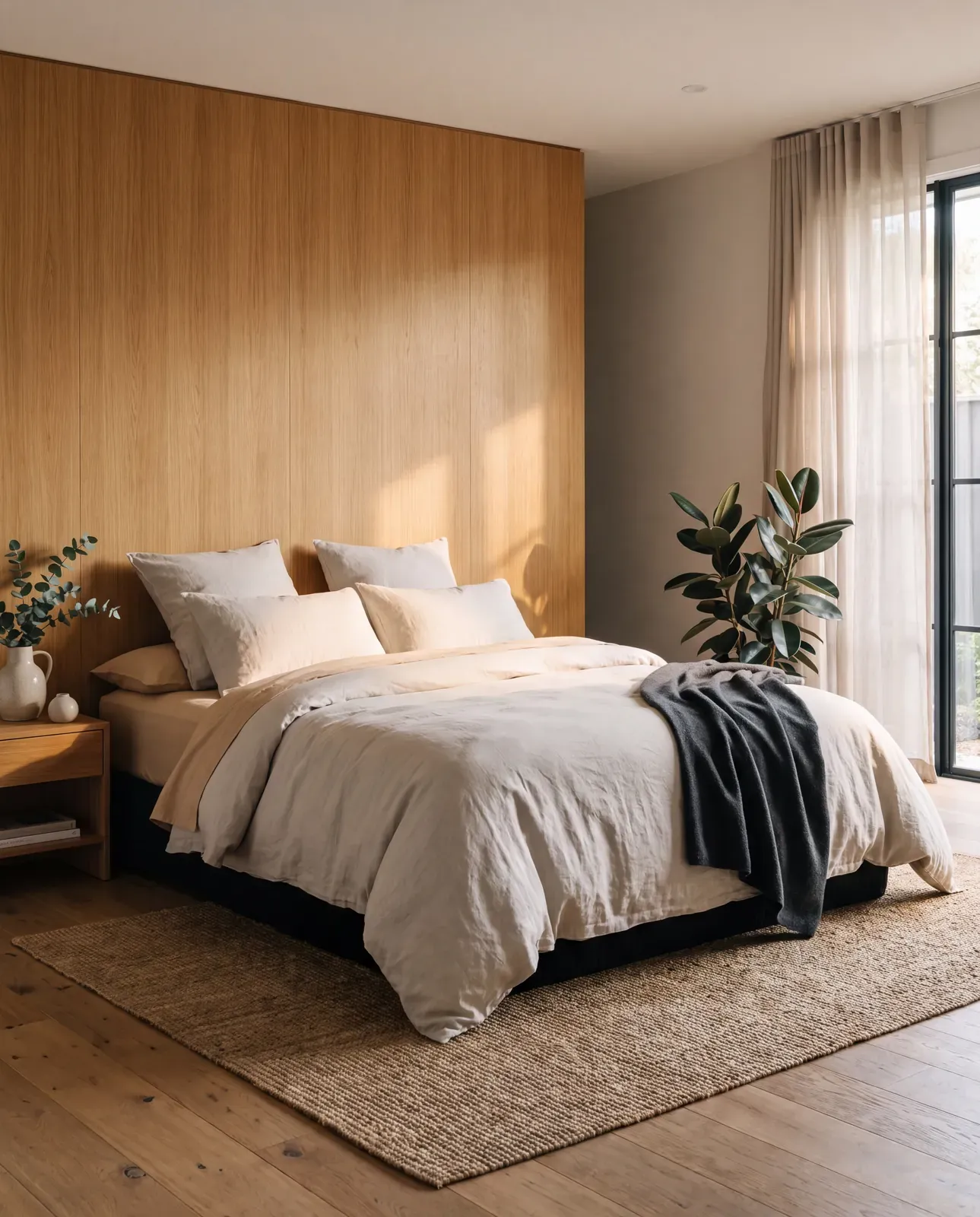
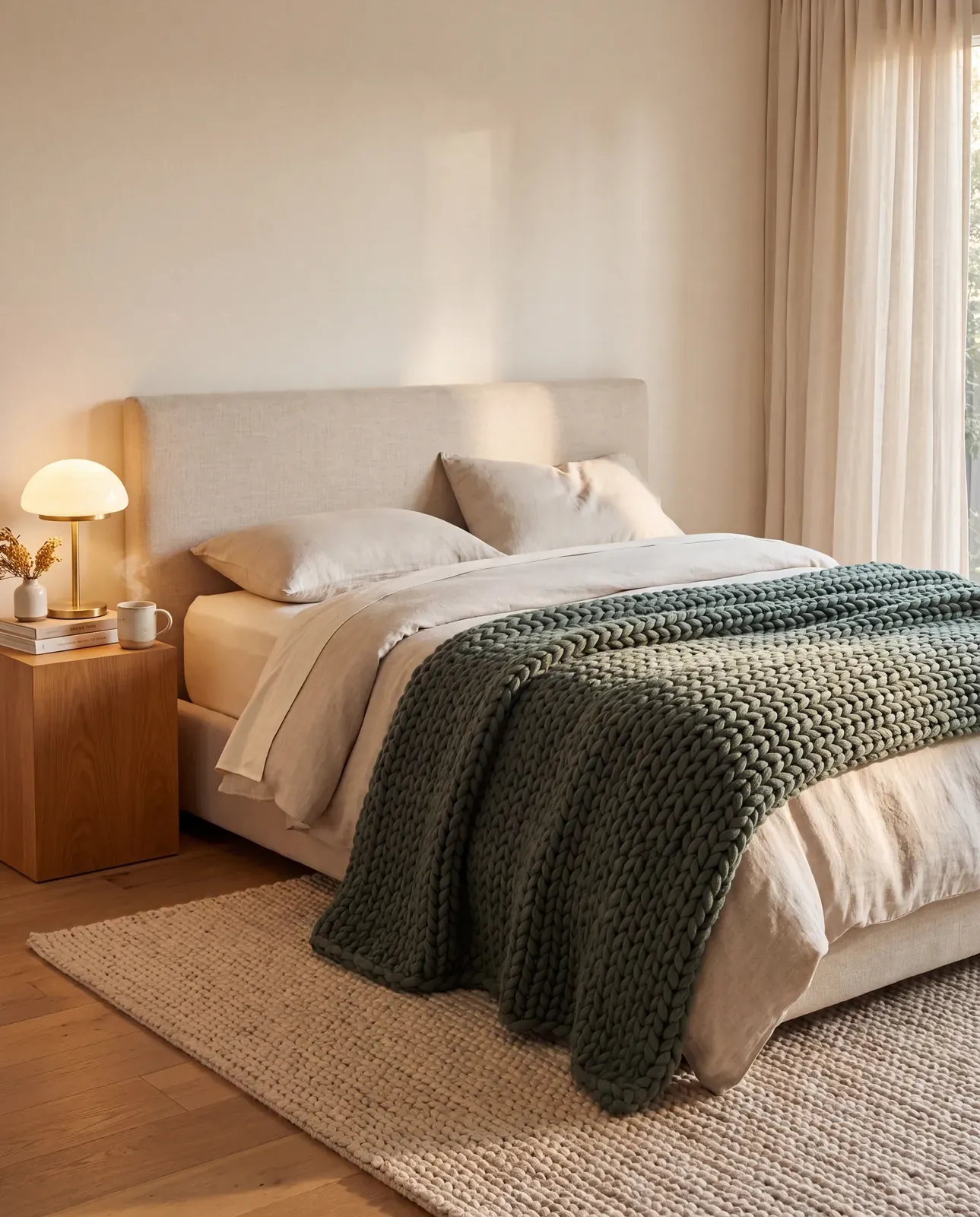
Every colourway, on a bed that looks slept in.
Bedding is bought on drape and texture, and both are destroyed by the thing most brands do to photograph it: press it flat and shoot it square on. The rumple is the product, and it is also the most expensive hour of the shoot.
The short answer
Bedding brands can show every colourway on a properly dressed bed in a real bedroom, without a styling day per set. The linen itself is not altered: colour, weave, weight and the way it falls are matched to the real product, while the room, the light and the styling around it are built. That is what makes it practical to show fourteen colourways in the same room, which is the comparison a customer is actually making.
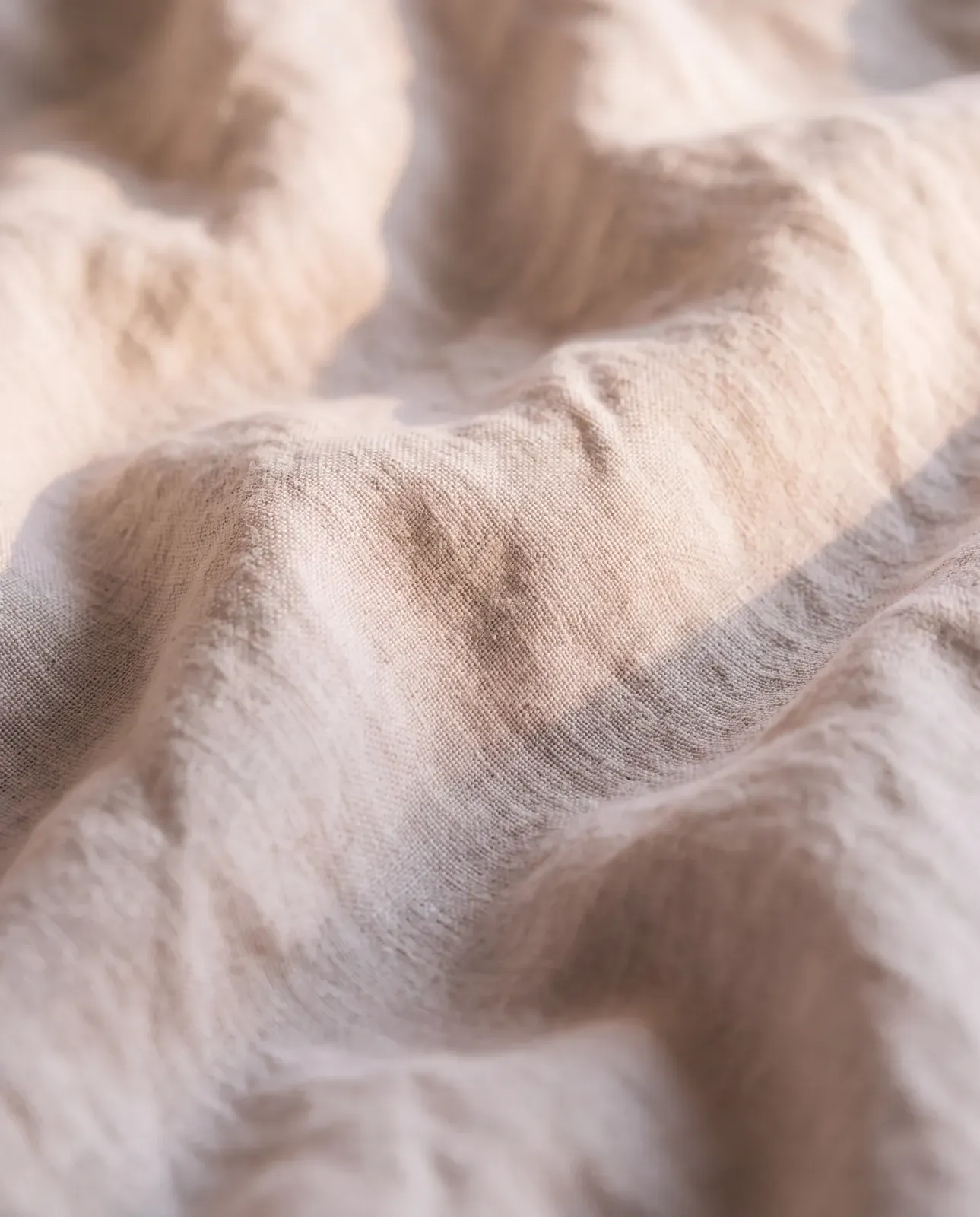
Why linen is slower to shoot than it looks
A bed is not a difficult subject. Making a bed look both beautiful and lived in, fourteen times, is.
The rumple takes longer than the frame
A stylist dresses, tucks, folds and hand-crumples a bed for forty minutes so it reads as inviting rather than showroom. Then it is shot in five. Multiply that by every colourway and the styling, not the photography, is the shoot.
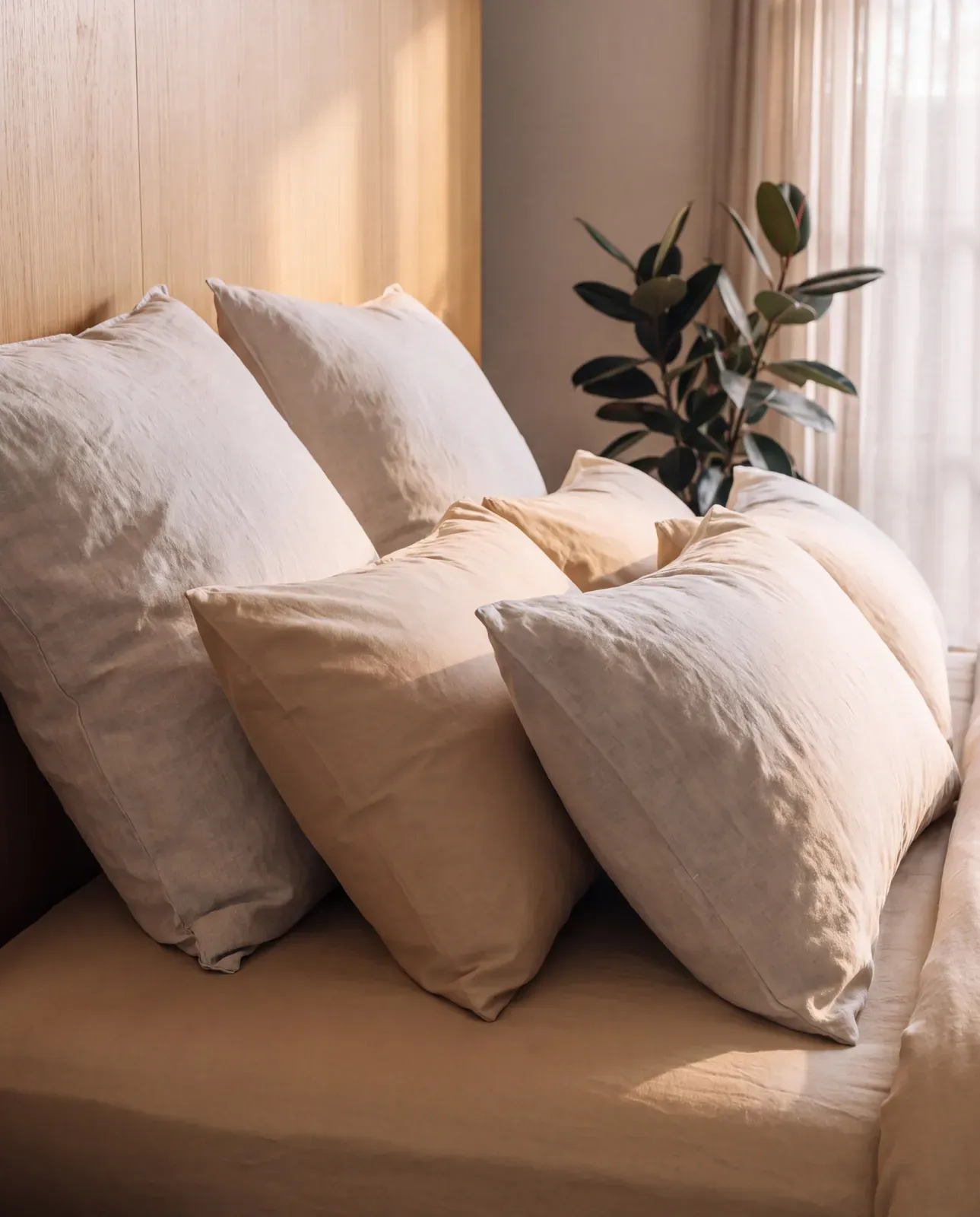
Whites and naturals fight the white balance
Oatmeal, bone, ivory and white are four different products and roughly one colour to a camera under mixed light. Getting them to read as distinct is a colour-management job that customers notice immediately when it is wrong.
One bedroom is one customer
The room you shoot in decides who the linen is for. A coastal bedroom sells to one buyer and a dark panelled one sells to another, and a single shoot day only lets you pick one.
Returns follow inaccurate colour
Linen is among the most returned homewares categories and mismatched colour is the common cause. The photograph has to be right, not flattering.
Fourteen colourways, one bedroom, one afternoon.
When the bed and the room are built together, the styling stops being repeated per colourway and the colour stops drifting between frames.
- 01
The drape is specified, not wrestled
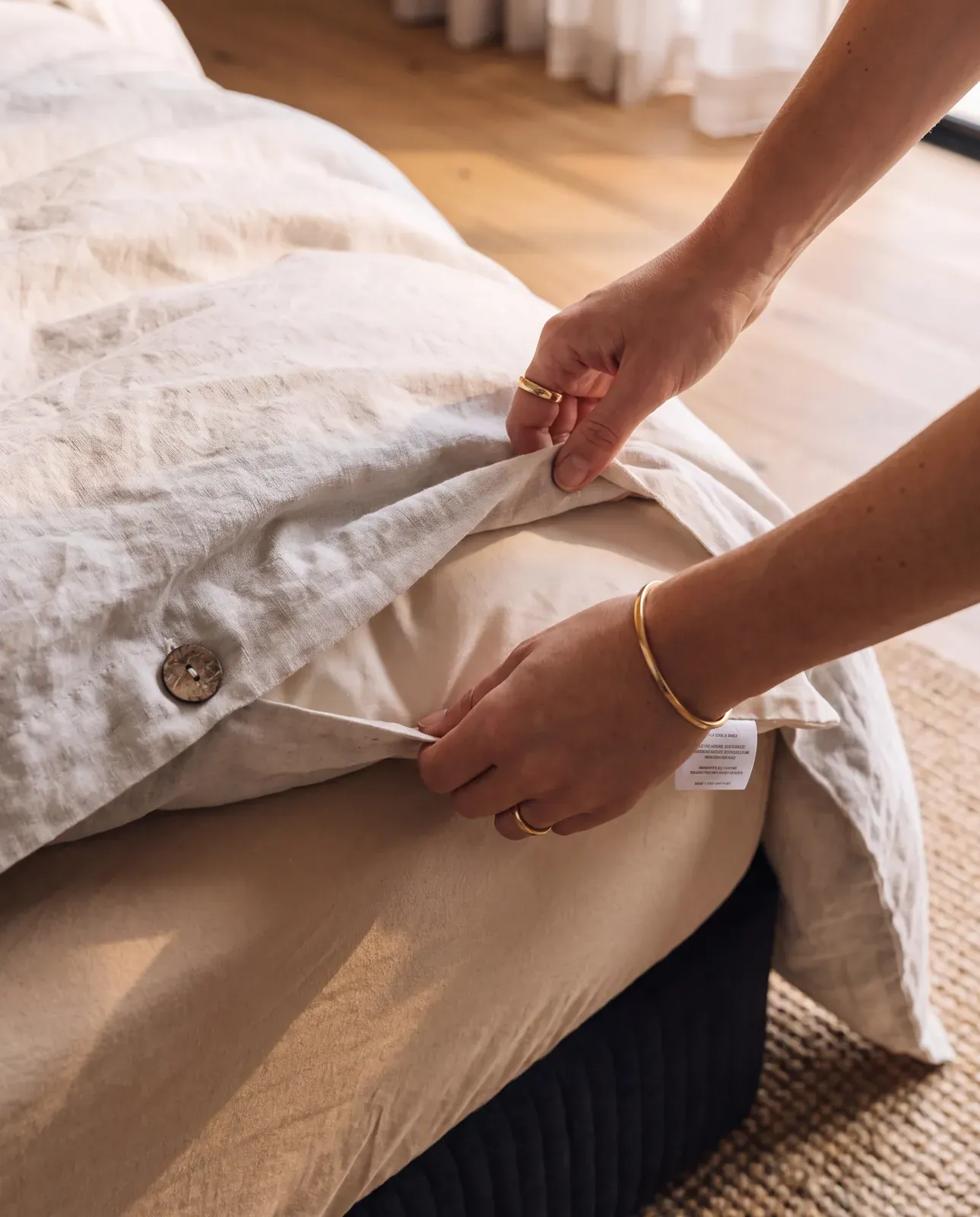
How the linen falls, where it creases and how it is folded back are described and produced deliberately, so every colourway is dressed identically rather than as well as the stylist managed by the eleventh bed.
- 02
Colour is held across the range
Each colourway is matched to the real fabric and rendered in the same light, so a customer comparing oatmeal against bone is comparing the products rather than two different afternoons.
- 03
One set, many rooms
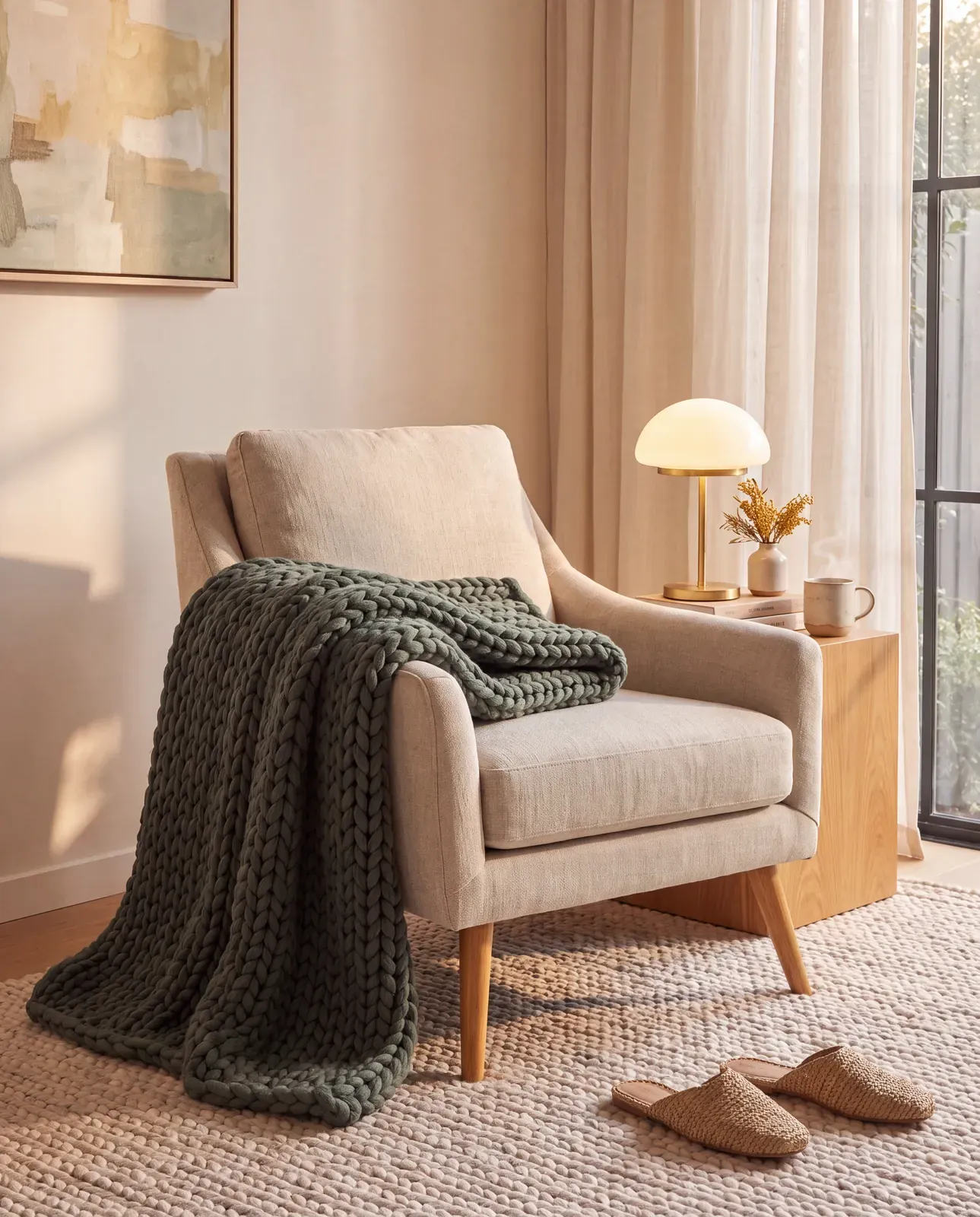
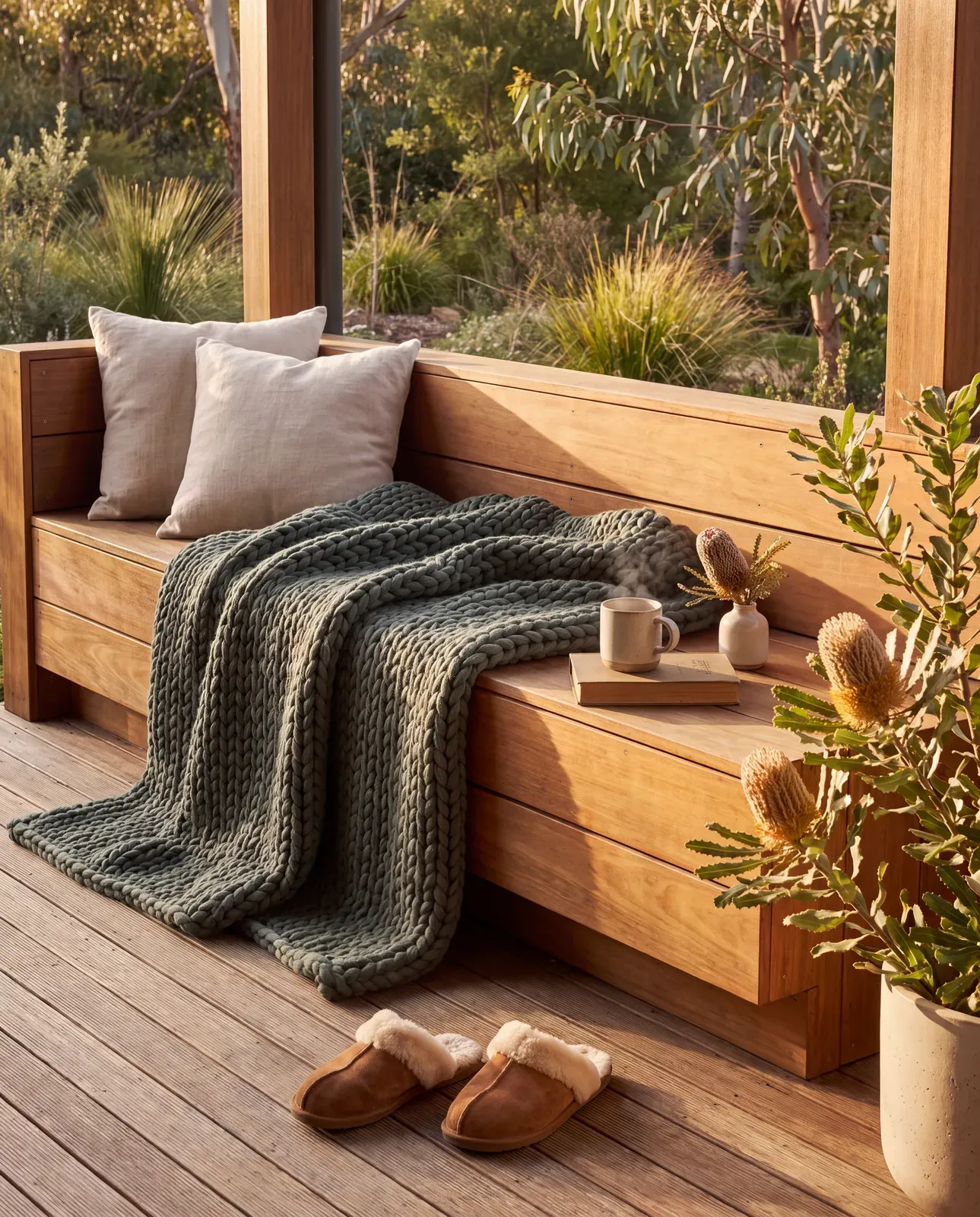
The same bedding can be shown in a coastal bedroom, a warm timber one and a dark contemporary one, which is three buyers instead of whichever one your studio happened to look like.
- 04
Seasonal without reshooting
Winter layering and summer simplicity are the same product styled differently. That becomes a change of brief rather than a second shoot six months later.
Six environments. One phone photo to start from.
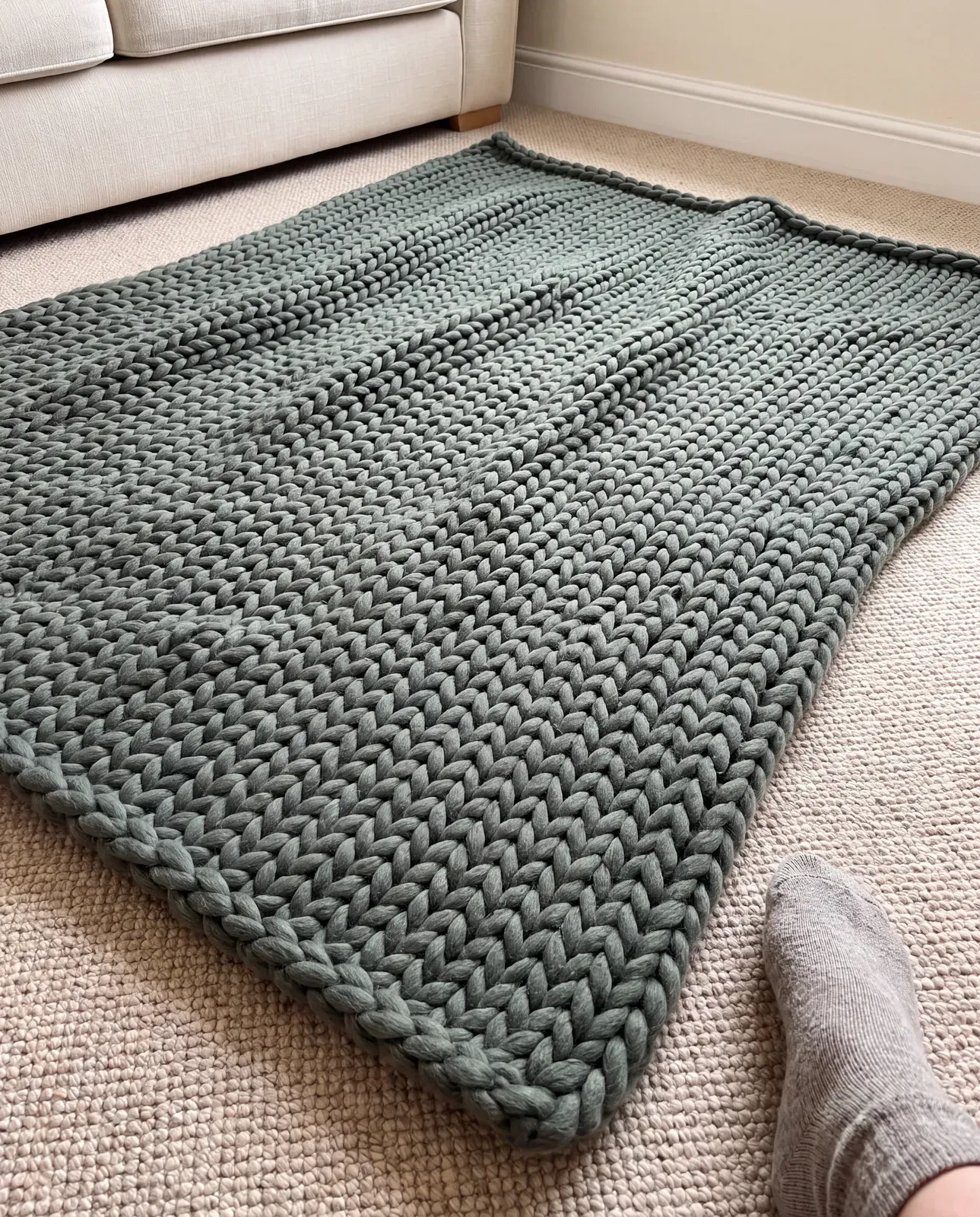
What they sent us
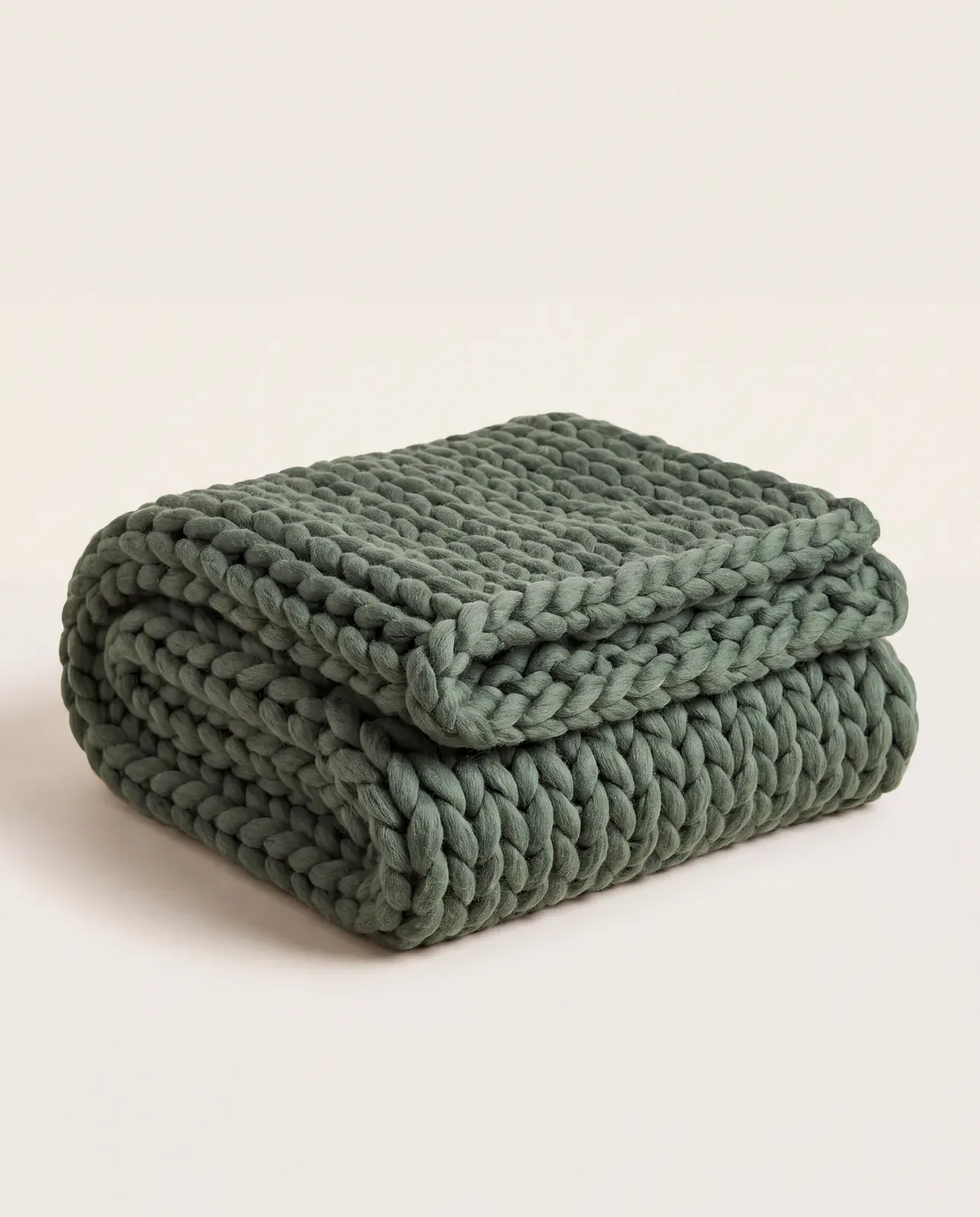
What came back
The questions people search.
Will the weave and texture actually look like our fabric?
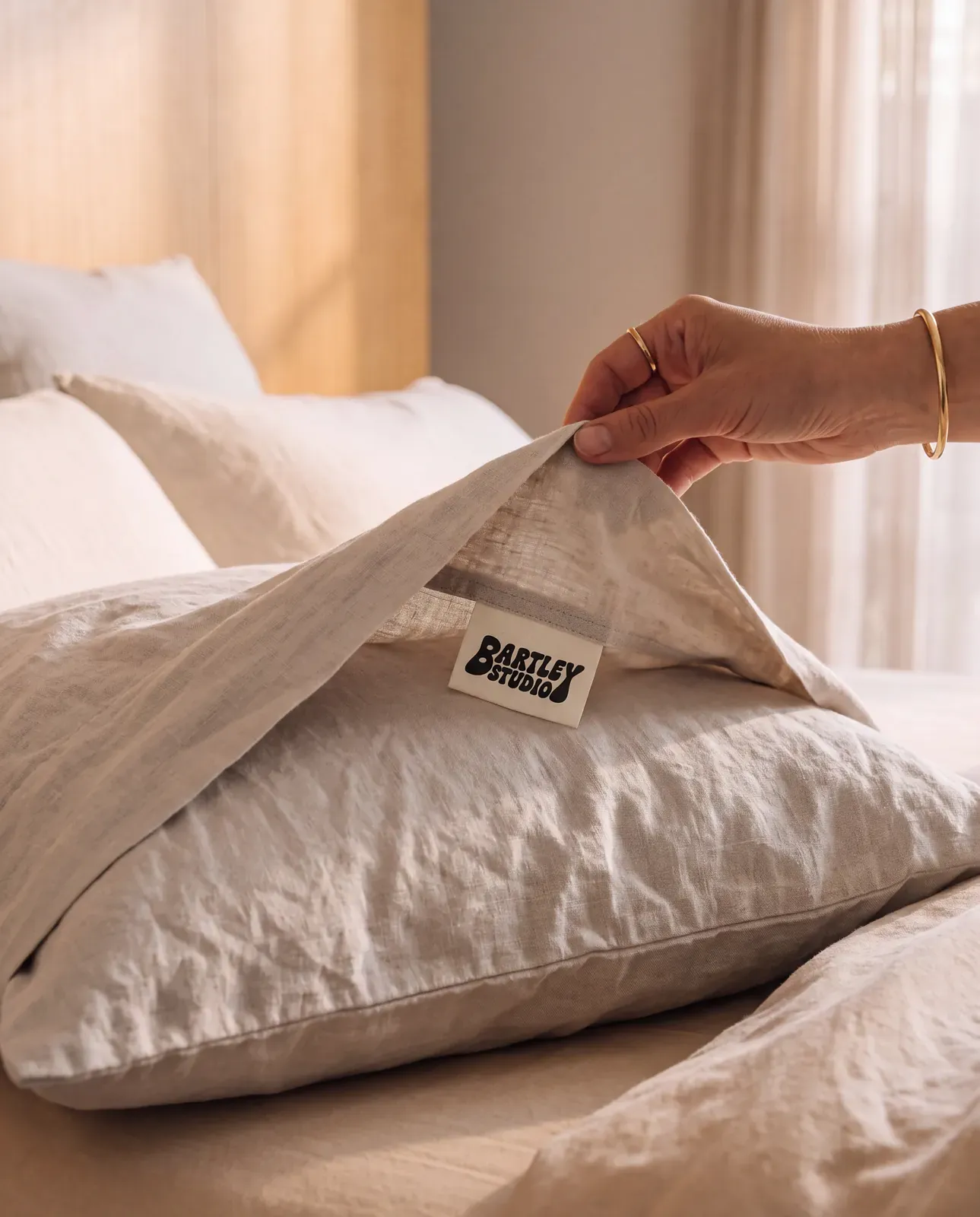
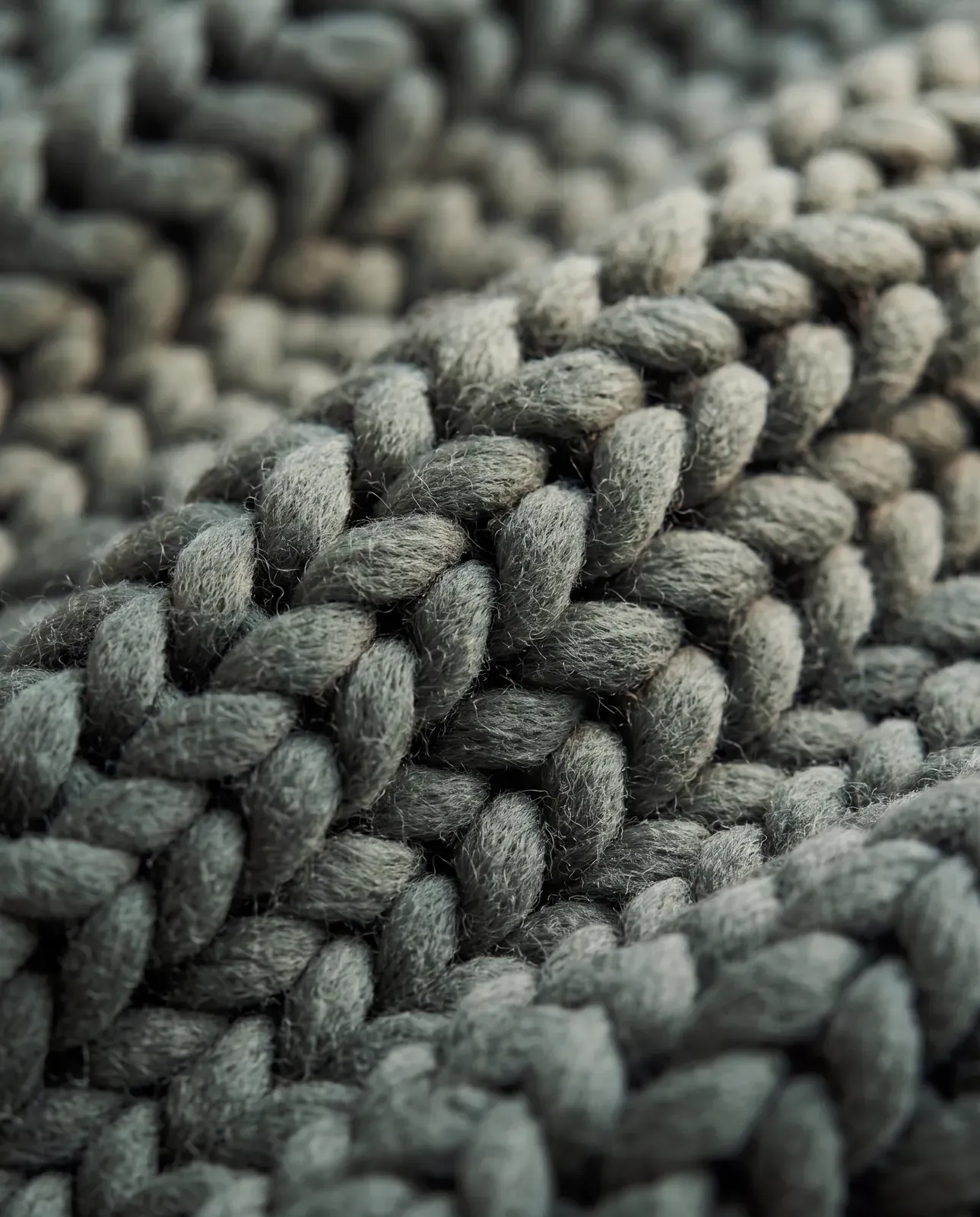
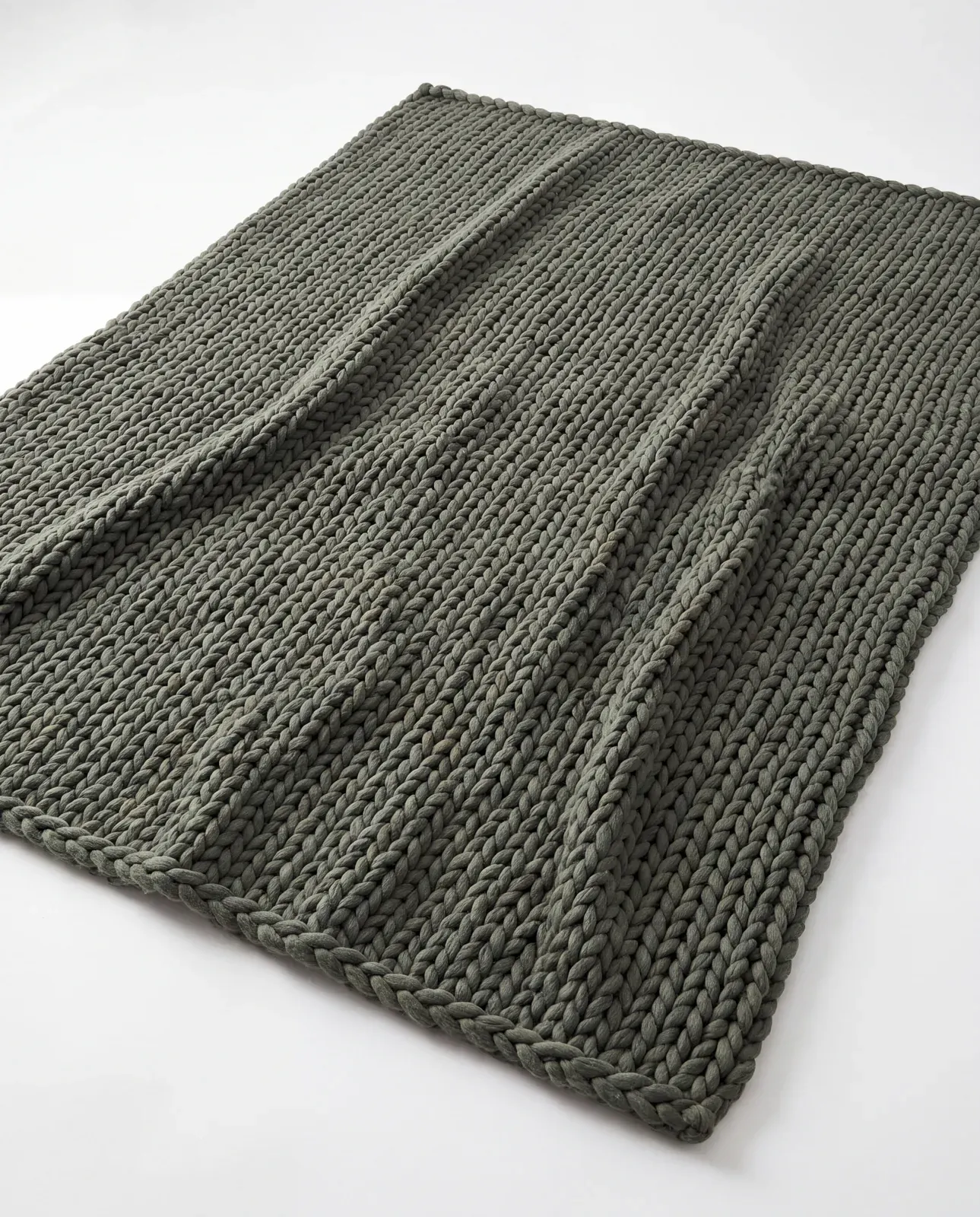
That is the part treated as non-negotiable. Weave, slub, weight and sheen are matched to the real linen from close reference, because texture is what the customer is buying and it is the first thing they check against the product when it arrives.
Can you match our exact colourways?
Yes, and the range is matched as a set rather than one at a time, which is the only way the neutrals stay distinguishable from each other. Physical swatches or accurate reference shots are the input.
Do you show the product on a bed or flat?
Both, and they do different jobs. The made bed sells the drape and the room; the flat detail sells the weave. Most bedding brands need the second for the listing and the first for everything else.
We already have one good bedroom shoot. Is that enough?
It is enough to start from. One accurate set of your linen in good light is the reference, and the rooms and colourways are built around it rather than shot again.
Also works for