Product page exampleFrom Ovis, a concept store by Bartley Studio
Rug product page example: the Kelp rug, from Ovis
A working product page from Ovis, a heritage rug house we designed, built and photographed as a concept. Use it in the window below, then read why each part is there.
Ovis is a concept store: we designed it, built it and made every photograph on it. It is not a real business and nothing is for sale.
Why each part of the Kelp rug page is there
Every part answers a question a buyer has before they add to cart, in the order they ask it.
Wool and silk, up close
The silk along each crest is the reason for the price, so the gallery shows it at the distance people judge it from.
Made to order, with a date
Sixteen weeks on the loom, with an arrival date worked out from today and the loom places left this season.
See it in a room
A link opens the visualiser with this rug already chosen, laid into a room in perspective at its real size.
Sizes drawn to scale
The planner shows each size in three rooms before the buyer commits.
The weaver in the gallery
A storytelling tile shows the hands behind the rug, so handmade is shown, not claimed.
Reviews with the size bought
The rating under the title and reviews that say which size, the last question answered.
What to take from this page for your own store
The ideas behind this page work on any product page. Here is each one, why it works and how to try it on yours.
-
Show the detail that justifies the price
Close-ups of the material, the joint or the stitching answer how it is made and how long it will last, which is what a higher price is paying for.
On this page: Wool and silk, up close
Try it on your store. Add two close-ups: the material, and the one detail that shows quality in your product.
-
Give a delivery date, not a range
A date worked out from today and the buyer's region answers "when will it arrive?" at the moment they are deciding.
On this page: Made to order, with a date
Try it on your store. Replace "ships in 2 to 4 weeks" with a date for each region or option, beside the buy button.
-
Show it in use, in a real setting
A product in a room, switched on or being worn lets the buyer picture it in their own life, which a plain packshot cannot do.
On this page: See it in a room
Try it on your store. Add one image of the product in use, in the kind of place your buyer would use it.
How many images, and which kinds, does a product page need? -
Let buyers check size or fit before they buy
Baymard Institute found that 42% of shoppers try to judge how big a product is from its images alone. A scale image, a sizer or a finder answers that before the order, not after the return. Baymard Institute, in-scale product images
On this page: Sizes drawn to scale
Try it on your store. Add one image with a person or a familiar object for scale, or a simple finder that turns a buyer's measurement into a size.
How do I cut returns caused by "not as pictured"? -
Show who makes it
A photograph of the maker at work shows the product is made by real people with real skill, which supports a handmade price.
On this page: The weaver in the gallery
Try it on your store. If your products are made by a person or a small team, add one real photo of them at work to the gallery.
-
Put reviews and guarantees beside the decision
Reviews that say what each owner bought, and a trial or guarantee in one line by the button, answer the last doubts where the buyer is about to commit.
On this page: Reviews with the size bought
Try it on your store. Move your rating under the product name, show the size or colour each reviewer bought, and put your returns promise next to the button.
Do you need photo reviews on product pages?
The imagery on the Kelp rug page
Every frame on this page was made by Bartley Studio. For a real brand, they start from phone photos of each product.
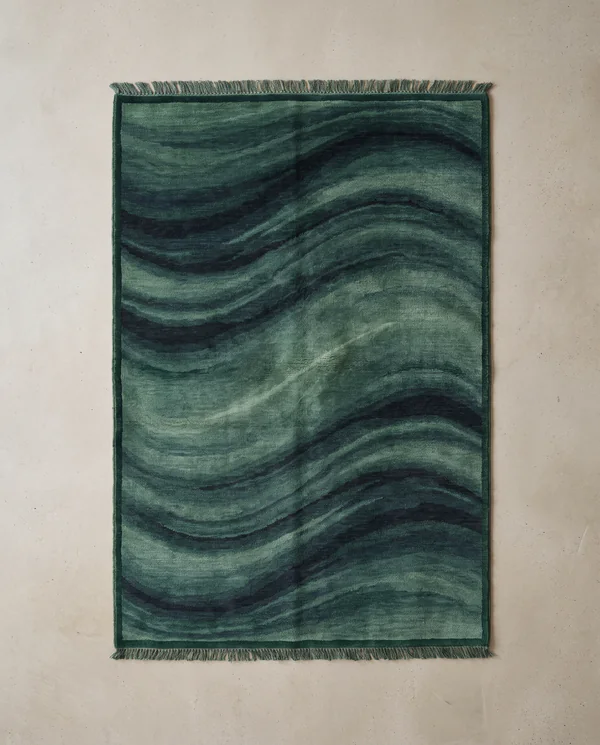
From above 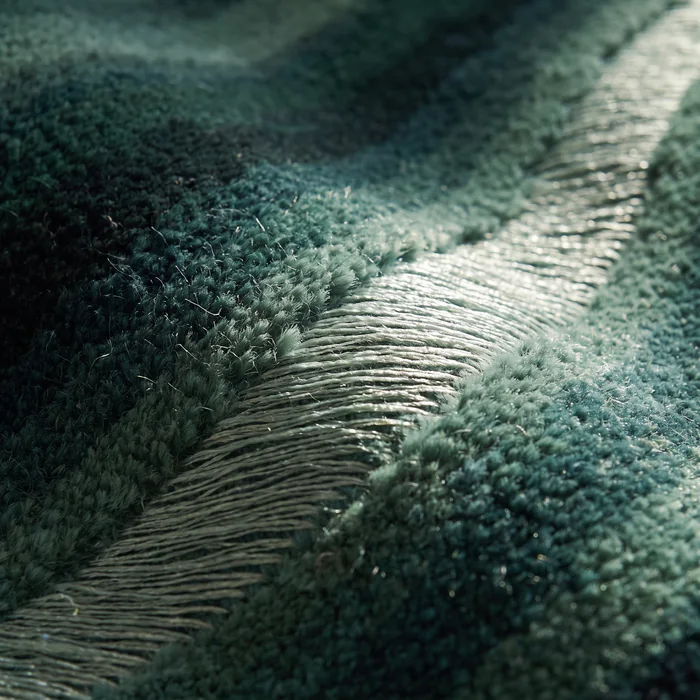
Wool and silk up close 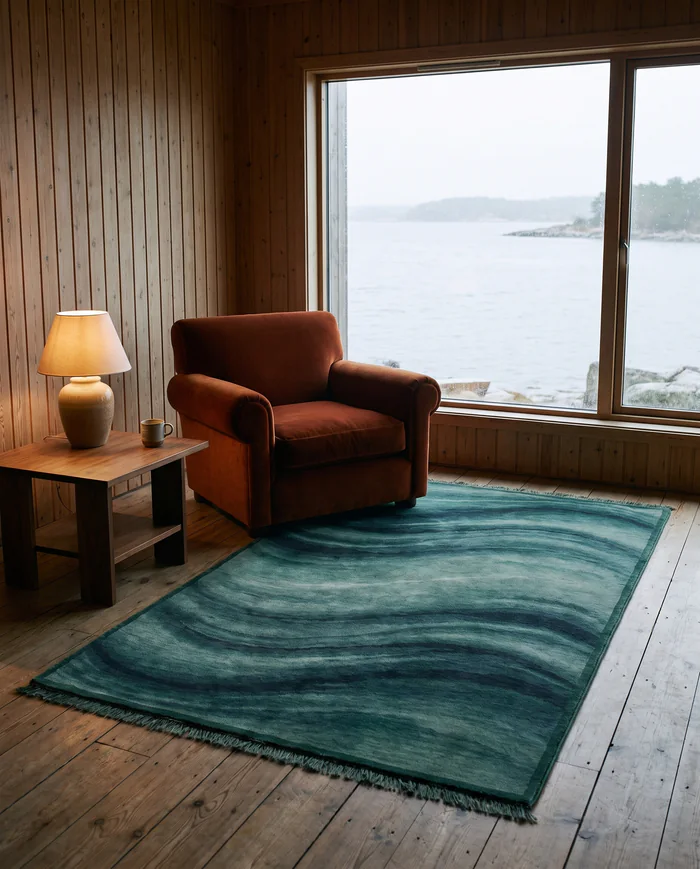
In a reading room 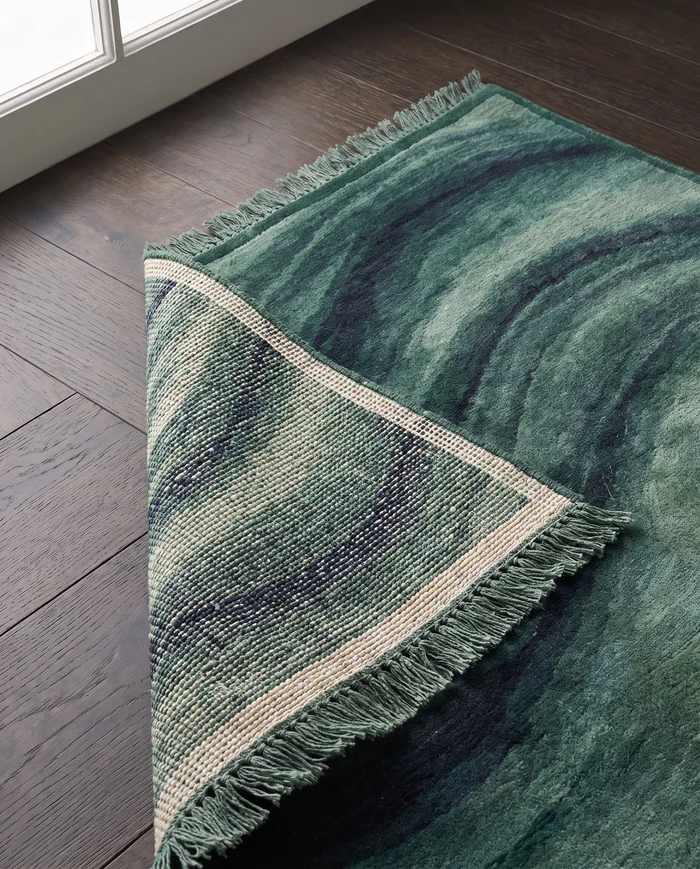
The knotted back 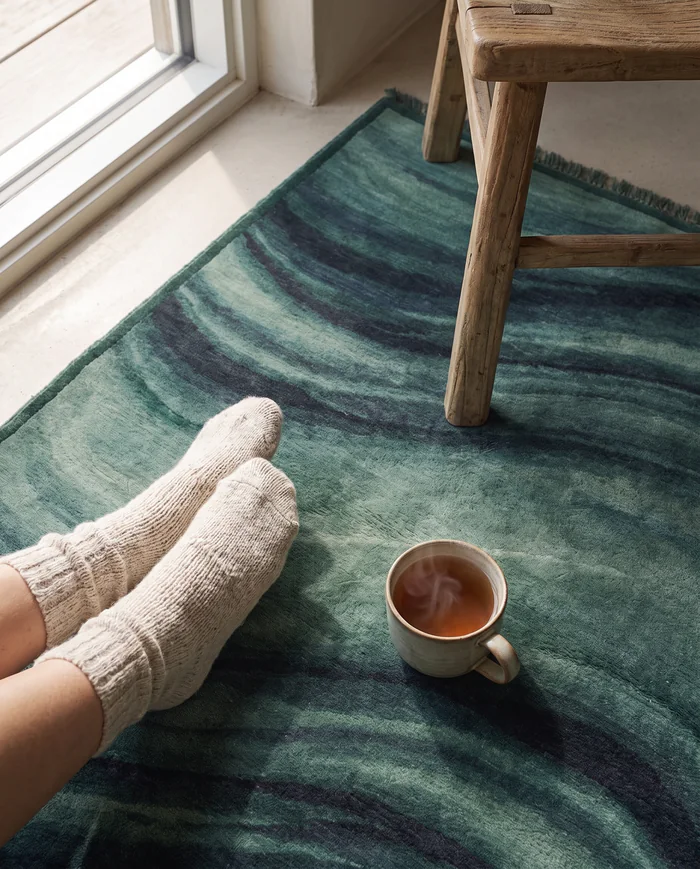
Underfoot


Score your own product page against this one
Open one of your product pages and tick what it does. It takes a minute, and every unticked line is a question your page leaves open.
More product page examples
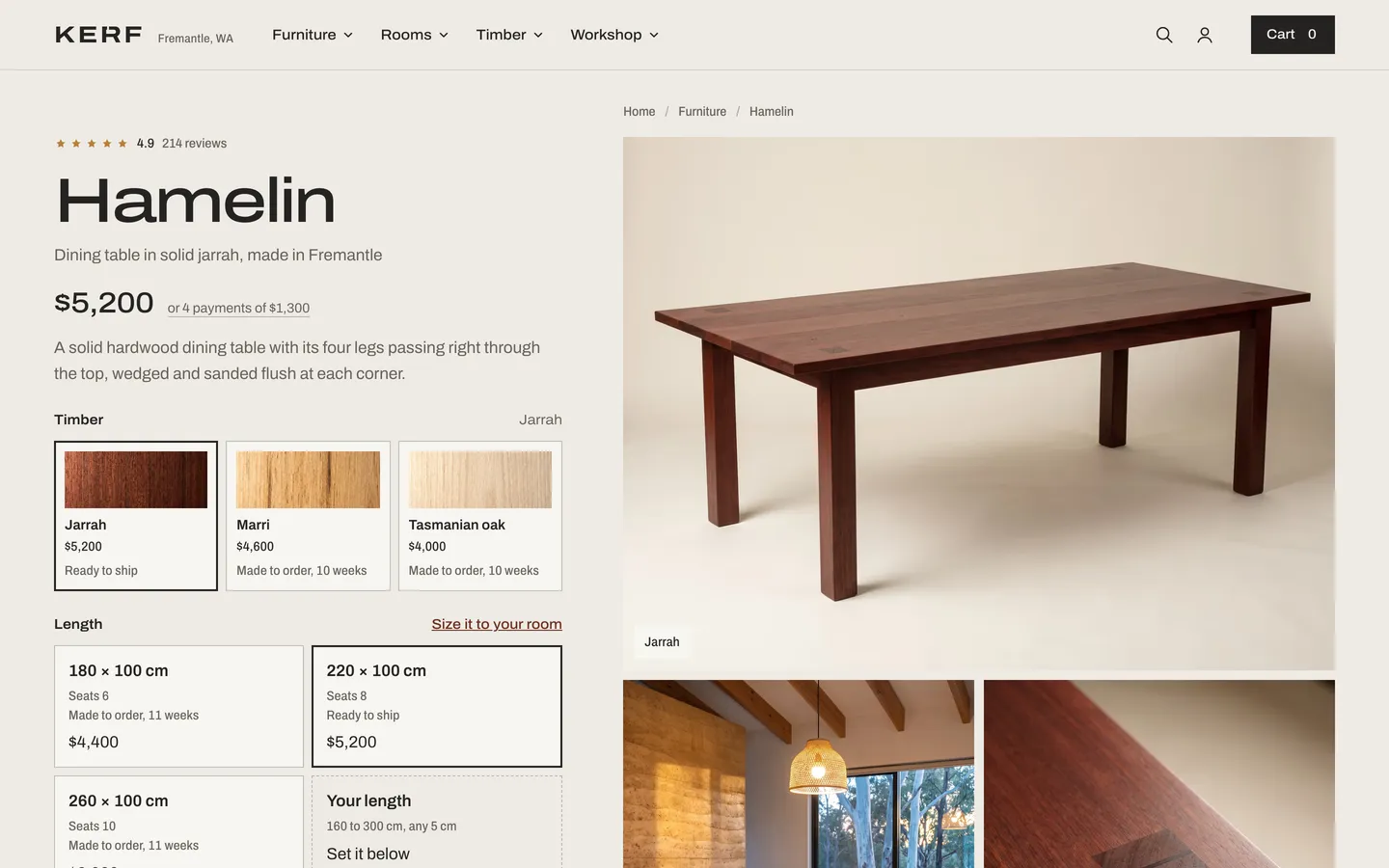
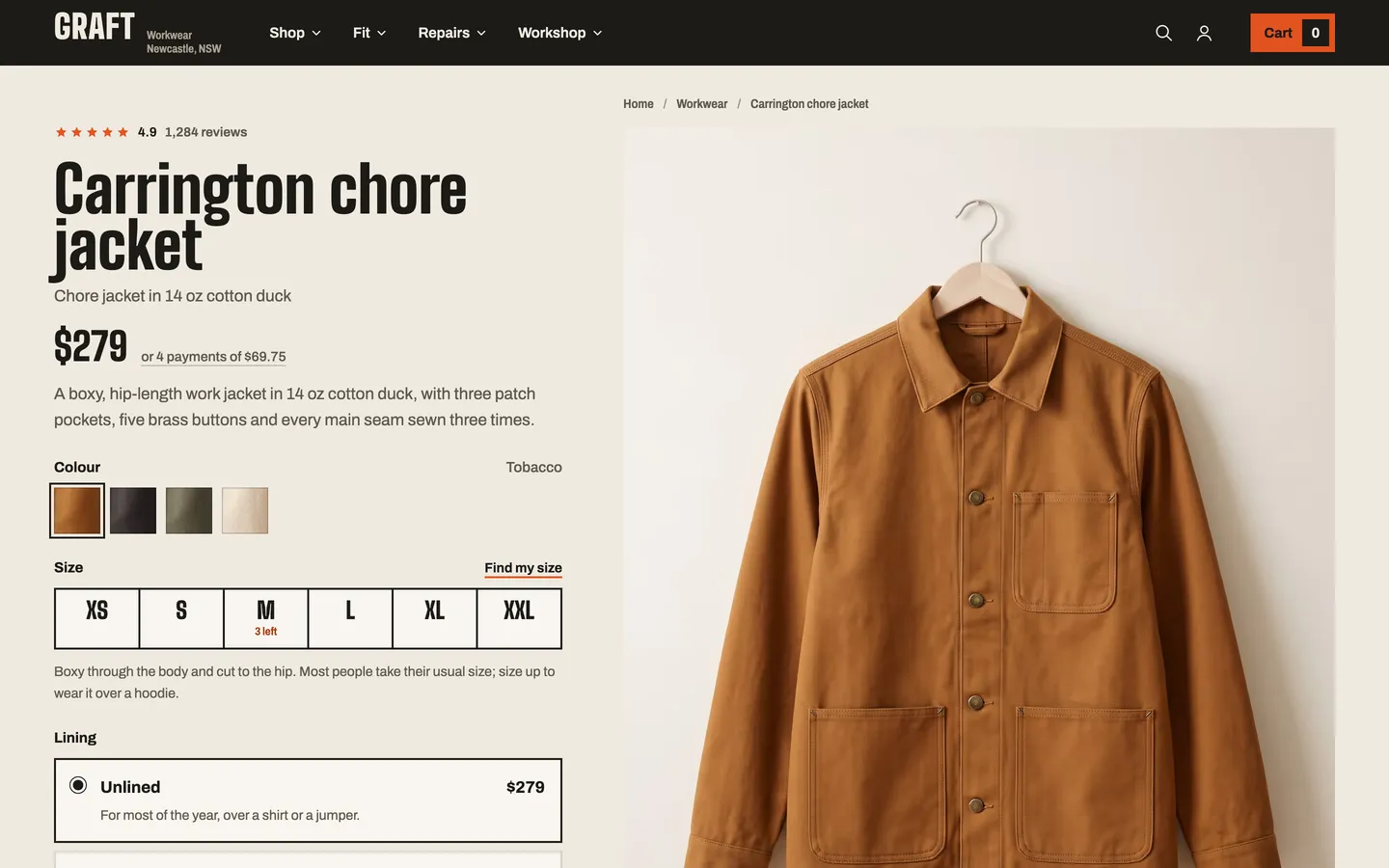
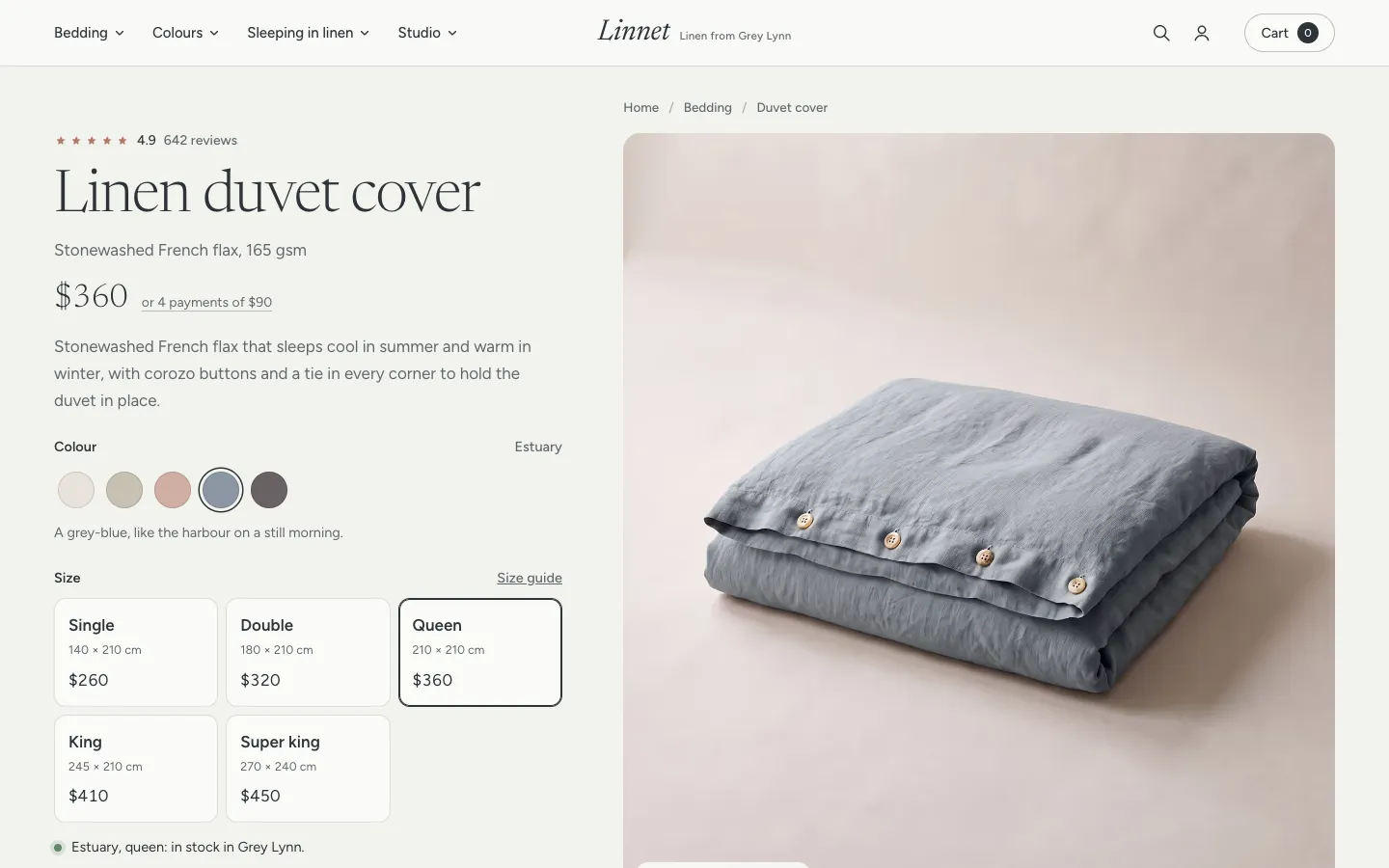


Questions about this example
Is Ovis a real store?
No. Ovis is a concept store designed and built by Bartley Studio, with every photograph made by the studio, to show what a product page and its imagery can do. Nothing on it is for sale.
Can Bartley Studio build a product page like this for my store?
Yes. Bartley Studio redesigns product pages around the photos you already have, or makes new imagery for them as well, and builds them into your Shopify store as a template for every product of that type.
Do I need new photos to get a page like this?
Not always. If your photos are good, the redesign uses them. If the gallery is missing frames buyers need, such as scale, detail or the product in use, Bartley Studio makes them from a phone photo of each product.
Still have a question? Ask us
Start a product page project
Redesign my product pagesTell us about your store and you get a clear quote.